
Ashok Kumar
EV Technology Specialist | 6 min read
Electric vehicles (EVs) are reshaping the global transportation landscape, driving the transition toward cleaner, smarter, and more sustainable mobility. However, one challenge continues to influence EV performance, ownership costs, and consumer confidence—battery degradation.
As EV adoption grows across India and worldwide, extending battery lifespan has become a top priority for manufacturers, researchers, and technology providers. Battery degradation refers to the gradual decline in a battery's ability to store and deliver energy, ultimately affecting driving range and overall vehicle efficiency.
The discussions and innovations showcased at AutoTech Asia highlighted how the automotive industry is actively working to address this challenge. From advanced battery management systems to next-generation battery chemistries, industry leaders are developing solutions that promise longer-lasting, safer, and more efficient EV batteries.
As a leading Future Mobility Exhibition and recognized EV Trade Show India, AutoTech Asia continues to serve as a platform where manufacturers, suppliers, researchers, and mobility experts explore technologies shaping the future of electric transportation.
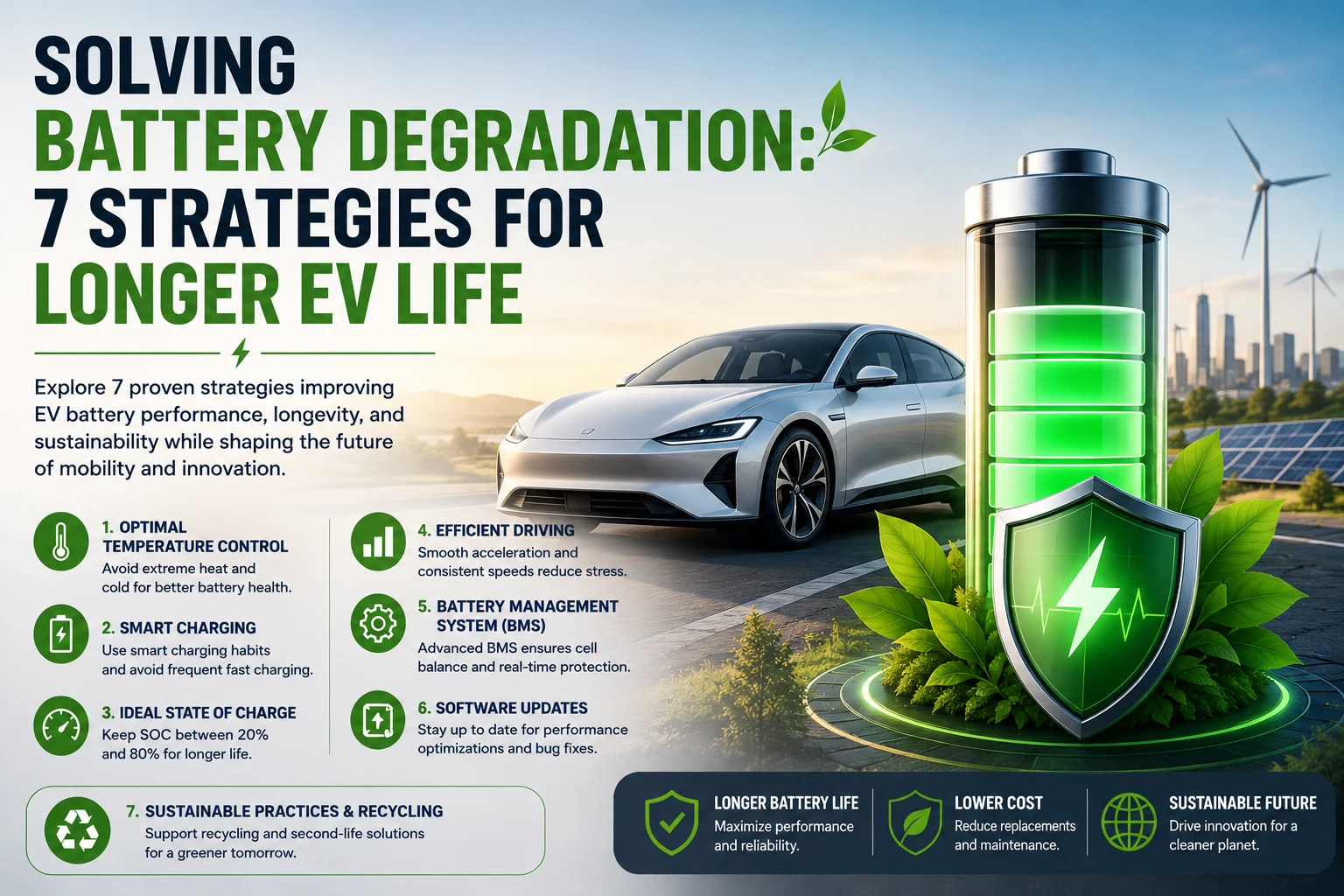
In this blog, we explore seven key strategies helping the EV industry reduce battery degradation and improve vehicle longevity.
1. Smart Charging Practices
One of the most effective ways to reduce battery degradation is through intelligent charging practices. Frequent charging to 100% and allowing batteries to discharge completely can accelerate wear and tear.
Modern EV manufacturers recommend maintaining battery charge levels between 20% and 80% for daily use. Advanced Battery Management Systems (BMS) monitor charging patterns and optimize energy flow to reduce stress on battery cells.
Smart charging solutions also include:
Scheduled charging during off-peak hours
Adaptive charging based on battery temperature
AI-powered charging optimization
Vehicle-to-grid (V2G) integration
As these technologies become more common, they are expected to play a major role in extending battery life across the EV ecosystem.
2. Advanced Thermal Management Systems
Temperature is one of the biggest contributors to battery degradation. Excessive heat accelerates chemical reactions within battery cells, while extremely cold conditions reduce efficiency and charging performance.
To address this challenge, manufacturers are investing heavily in advanced thermal management systems, including:
Liquid cooling technology
Active battery heating systems
Phase-change cooling materials
AI-driven temperature monitoring
These systems help maintain optimal operating temperatures regardless of environmental conditions. As discussed at leading EV industry events and every major Future Mobility Exhibition, thermal management continues to be a key area of innovation for next-generation electric vehicles.
3. Improved Battery Chemistry
Battery technology is evolving rapidly. Traditional lithium-ion batteries are being enhanced through improved chemistries that offer better durability, higher energy density, and increased safety.
Some promising developments include:
Lithium Iron Phosphate (LFP) Batteries
LFP batteries are gaining popularity due to their longer cycle life and enhanced thermal stability.
Solid-State Batteries
These batteries replace liquid electrolytes with solid materials, reducing degradation and improving safety.
Silicon-Anode Batteries
Silicon-based anodes can increase energy storage capacity while minimizing long-term performance loss.
Battery manufacturers showcasing innovations at major EV industry events are continuously introducing technologies designed to improve battery longevity and overall vehicle performance.
4. Battery Health Monitoring Through AI
Artificial Intelligence is becoming an essential tool in battery management.
Modern EVs generate enormous amounts of operational data. AI algorithms analyze this data to identify patterns that may indicate early signs of battery degradation. Predictive analytics can help manufacturers and vehicle owners take preventive actions before serious issues develop.
Benefits of AI-powered battery monitoring include:
Real-time health diagnostics
Predictive maintenance alerts
Improved charging efficiency
Reduced warranty costs
Enhanced vehicle reliability
At every major EV Trade Show India, AI-enabled battery analytics is emerging as one of the most discussed technologies shaping the future of electric mobility.
5. Battery Recycling and Second-Life Applications
Even after an EV battery reaches the end of its automotive life, it often retains significant energy storage capacity.
Rather than disposing of used batteries, manufacturers are exploring second-life applications such as:
Renewable energy storage
Residential backup power systems
Grid stabilization projects
Commercial energy management
Battery recycling initiatives also help recover valuable materials like lithium, cobalt, nickel, and manganese, reducing dependence on raw material extraction.
Sustainable battery lifecycle management is becoming a key topic at international mobility events and every prominent Future Mobility Exhibition, where industry leaders discuss circular economy strategies for the EV sector.
6. Fast-Charging Optimization
Fast charging has significantly improved EV convenience, but excessive reliance on high-speed charging can contribute to battery degradation if not managed properly.
To overcome this challenge, manufacturers are developing:
Intelligent charging algorithms
Adaptive current control systems
Dynamic charging rate adjustments
Advanced battery cooling during charging
These innovations allow EVs to benefit from rapid charging while minimizing long-term battery stress.
As charging infrastructure expands across India and globally, balancing charging speed with battery health will remain a major focus area for manufacturers, infrastructure providers, and policymakers.
7. Continuous Research and Industry Collaboration
Perhaps the most important strategy for combating battery degradation is collaboration across the entire EV ecosystem.
Battery manufacturers, automotive companies, technology providers, research institutions, and policymakers are working together to accelerate innovation. Industry events provide a critical platform for knowledge sharing, partnership development, and technology showcase opportunities.
AutoTech Asia brings together stakeholders from across the electric mobility value chain, enabling discussions on:
Advanced battery technologies
Charging infrastructure
Smart mobility solutions
EV components and systems
Sustainable transportation innovations
As a leading EV Trade Show India, AutoTech Asia helps industry participants discover practical solutions that drive the future of electric mobility while addressing key challenges such as battery performance and longevity. The event showcases innovations across EVs, battery technologies, charging infrastructure, and future mobility solutions.
The Road Ahead for Battery Technology
The future of electric mobility depends heavily on the ability to create batteries that are more efficient, durable, affordable, and sustainable. While battery degradation remains a challenge, ongoing advancements in charging technologies, thermal management, battery chemistry, AI-driven diagnostics, and recycling solutions are significantly improving battery lifespan.
As EV adoption accelerates worldwide, these innovations will help increase consumer confidence, reduce ownership costs, and support the transition toward cleaner transportation.
Industry events such as AutoTech Asia provide valuable opportunities for businesses, researchers, and technology leaders to explore the latest developments shaping the EV landscape. By fostering collaboration and innovation, these platforms play a crucial role in building a smarter, greener, and more sustainable mobility future.
Conclusion
Battery degradation remains one of the most important challenges in electric mobility, but ongoing innovation is delivering promising solutions. Smart charging systems, advanced thermal management, improved battery chemistries, AI-powered diagnostics, recycling initiatives, and industry collaboration are helping manufacturers create batteries that last longer and perform better.
The innovations showcased and discussed across the EV ecosystem demonstrate that the future of electric mobility is becoming increasingly efficient and sustainable. Industry platforms like AutoTech Asia continue to play an important role in bringing together technology leaders, manufacturers, and decision-makers who are driving advancements in battery technology and smart mobility.
As the EV sector moves forward, businesses attending a leading Future Mobility Exhibition and EV Trade Show India gain valuable insights into emerging technologies, market trends, and solutions that will define the next generation of electric vehicles.
Comments (8)


David Kim
2 days agoGreat article! I'm particularly interested in the battery swapping technology mentioned. Has anyone here had experience with Gogoro's system in Taiwan? I'm curious about the user experience compared to traditional charging.

About the Author

Ashok Kumar
EV Technology Specialist
Ashok Kumar specializes in electric vehicle technology and infrastructure development across Asia.
Related Articles

Subscribe to Our Newsletter
Get the latest automotive technology insights delivered directly to your inbox