
Ashok Kumar
EV Technology Specialist | 5 min read
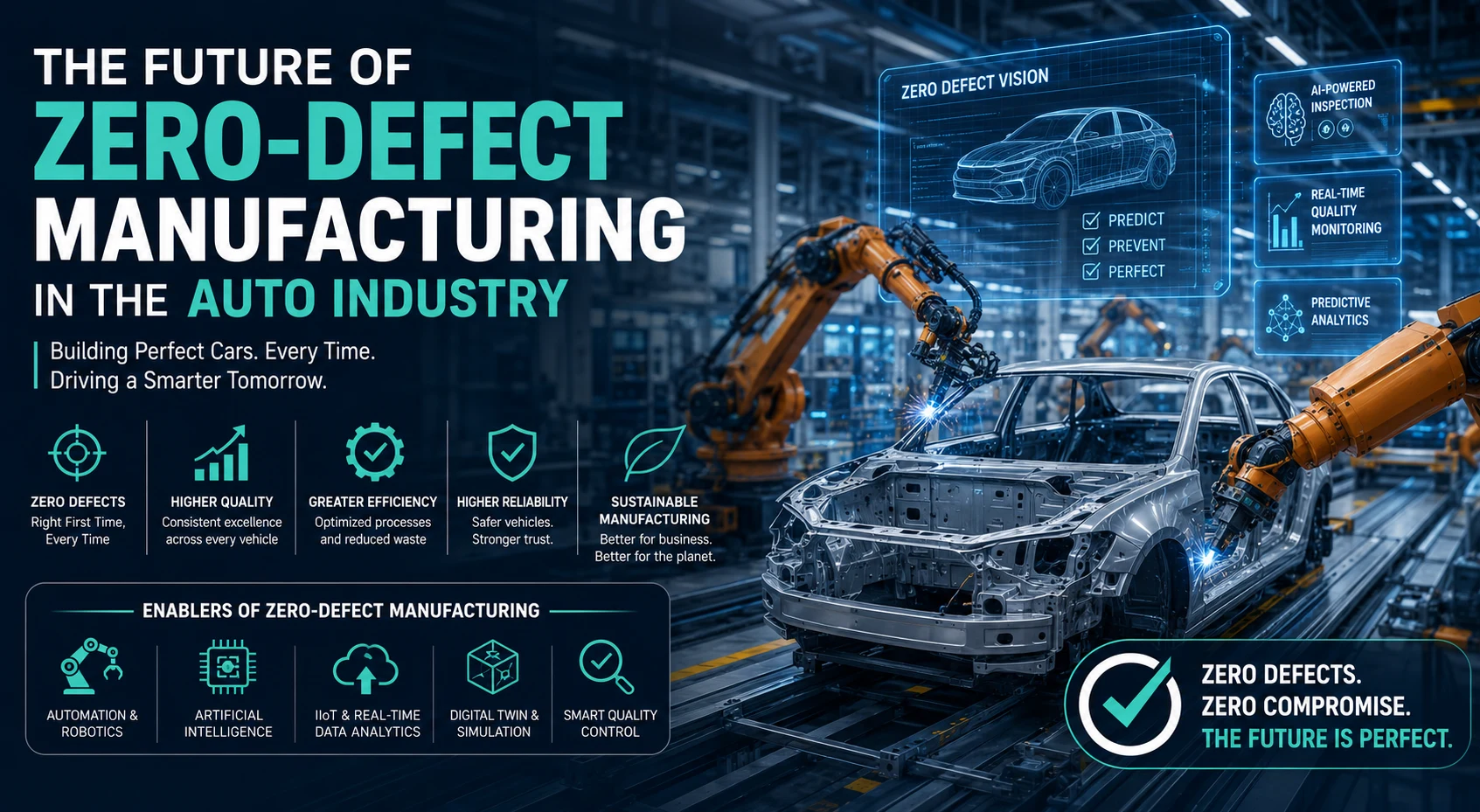
The automotive industry is undergoing a remarkable transformation driven by automation, digitalization, artificial intelligence, and smart manufacturing technologies. As vehicles become more sophisticated and customer expectations continue to rise, manufacturers are under increasing pressure to deliver products with exceptional quality and reliability. This has led to the growing focus on zero-defect manufacturing, a production approach aimed at eliminating defects before they occur rather than detecting them after production.
Zero-defect manufacturing is no longer just a quality management goal; it is becoming a competitive necessity. Automotive manufacturers are investing heavily in advanced technologies that enable real-time monitoring, predictive maintenance, automated inspections, and intelligent production systems. Discussions around these innovations are increasingly taking center stage at every major Automotive Technology Expo and Smart Mobility Expo, where industry leaders showcase solutions that are redefining manufacturing excellence.
What is Zero-Defect Manufacturing?
Zero-defect manufacturing is a production philosophy that seeks to ensure products are manufactured correctly the first time, with minimal errors, rework, or waste. Instead of relying solely on final quality inspections, manufacturers focus on preventing defects throughout the production process.
The concept is based on several key principles:
Continuous quality improvement
Process optimization
Real-time monitoring
Error prevention systems
Data-driven decision making
Automation and digital integration
In the automotive industry, where even a minor defect can impact safety, performance, and customer trust, achieving near-perfect production standards is critical.
Why Zero-Defect Manufacturing Matters
Modern vehicles contain thousands of components, sophisticated electronics, advanced sensors, and complex software systems. As electric vehicles, autonomous technologies, and connected mobility solutions become more common, manufacturing precision becomes increasingly important.
Zero-defect manufacturing offers several benefits:
Improved Product Quality
Consistent quality ensures vehicles meet strict safety and performance standards while reducing customer complaints and warranty claims.
Reduced Production Costs
Detecting defects early prevents costly rework, material waste, and production delays.
Enhanced Customer Satisfaction
High-quality vehicles improve brand reputation and customer loyalty.
Greater Operational Efficiency
Streamlined processes reduce downtime and improve overall manufacturing productivity.
These advantages make zero-defect manufacturing a key strategic priority for automotive companies worldwide.
The Role of Artificial Intelligence
Artificial Intelligence (AI) is becoming one of the most powerful tools supporting zero-defect manufacturing.
AI systems can analyze massive amounts of production data in real time to identify patterns, detect anomalies, and predict potential issues before they occur.
Applications include:
Predictive quality control
Defect detection
Process optimization
Equipment performance monitoring
Production forecasting
Machine learning algorithms continuously improve their accuracy, enabling manufacturers to make smarter decisions and reduce the risk of production errors.
At every leading Automotive Technology Expo, AI-powered manufacturing solutions are among the most discussed innovations shaping the future of automotive production.
Smart Sensors and Real-Time Monitoring
Smart factories rely on interconnected sensors that collect data throughout the production process.
These sensors monitor:
Temperature
Pressure
Alignment
Vibration
Component dimensions
Equipment performance
Real-time monitoring allows manufacturers to identify deviations immediately and take corrective action before defects occur.
The integration of Industrial Internet of Things (IIoT) technologies enables seamless communication between machines, systems, and operators, creating a highly responsive manufacturing environment.
Robotics and Automation
Automation has long played a significant role in automotive manufacturing, but today's robotics systems are far more intelligent and precise than ever before.
Advanced robotic systems help eliminate human error while ensuring consistent production quality.
Common applications include:
Welding
Painting
Assembly
Material handling
Inspection processes
Collaborative robots, or cobots, are also becoming increasingly popular. These robots work alongside human operators, combining precision automation with human expertise.
As showcased at major Smart Mobility Expo events, robotic automation continues to drive improvements in quality, efficiency, and manufacturing flexibility.
Digital Twins Transforming Manufacturing
One of the most exciting developments in zero-defect manufacturing is the use of digital twin technology.
A digital twin is a virtual replica of a physical product, machine, or production line. Manufacturers can simulate operations, test scenarios, and identify potential issues before implementing changes in real-world environments.
Benefits include:
Reduced production risks
Faster problem-solving
Improved process optimization
Enhanced predictive maintenance
Better product development
Digital twins provide valuable insights that help manufacturers prevent defects before they impact production.
Visit us for Registration: https://autotechasia.com/delegate
Predictive Maintenance for Better Quality
Equipment failures are a major cause of production defects and downtime.
Predictive maintenance uses AI, sensors, and data analytics to monitor machine health continuously.
Instead of waiting for equipment to fail, manufacturers can identify warning signs early and schedule maintenance proactively.
Benefits include:
Reduced unexpected downtime
Longer equipment lifespan
Improved product consistency
Lower maintenance costs
Predictive maintenance is rapidly becoming a core component of smart manufacturing strategies across the automotive sector.
Data Analytics Driving Continuous Improvement
Modern automotive factories generate enormous amounts of data every day.
Advanced analytics platforms help manufacturers transform this data into actionable insights.
Data analytics supports:
Quality trend analysis
Root cause identification
Process improvement initiatives
Supply chain optimization
Production planning
By leveraging real-time insights, manufacturers can continuously refine their processes and move closer to achieving zero-defect production environments.
Challenges to Achieving Zero-Defect Manufacturing
Despite significant technological advancements, achieving zero defects remains a complex challenge.
Some common obstacles include:
High implementation costs
Integration of legacy systems
Workforce training requirements
Data management complexities
Cybersecurity concerns
However, ongoing innovation and increasing technology adoption are helping manufacturers overcome these challenges and accelerate digital transformation efforts.
The Future of Automotive Manufacturing
The future of zero-defect manufacturing will be driven by greater connectivity, automation, and intelligence across production systems.
Emerging technologies expected to play a major role include:
Artificial Intelligence
Machine Learning
Advanced Robotics
Digital Twins
Edge Computing
Industrial IoT
Computer Vision Systems
Autonomous Manufacturing Platforms
As these technologies continue to evolve, manufacturers will gain unprecedented visibility and control over production processes, making defect-free manufacturing increasingly achievable.
Conclusion
Zero-defect manufacturing represents the next stage in automotive production excellence. By combining AI, automation, smart sensors, predictive maintenance, digital twins, and advanced analytics, manufacturers can significantly improve quality while reducing costs and operational risks.
As vehicle technologies continue to evolve, maintaining the highest standards of manufacturing precision will become even more critical. Industry platforms such as Automotive Technology Expo and Smart Mobility Expo play an important role in showcasing the innovations, technologies, and best practices that are shaping the future of automotive manufacturing.
The journey toward zero-defect manufacturing is not just about reducing errors, it is about building smarter factories, delivering safer vehicles, and creating a more efficient and sustainable automotive industry for the future.
Comments (8)


David Kim
2 days agoGreat article! I'm particularly interested in the battery swapping technology mentioned. Has anyone here had experience with Gogoro's system in Taiwan? I'm curious about the user experience compared to traditional charging.

About the Author

Ashok Kumar
EV Technology Specialist
Ashok Kumar specializes in electric vehicle technology and infrastructure development across Asia.
Related Articles



Subscribe to Our Newsletter
Get the latest automotive technology insights delivered directly to your inbox